




The 10/11 Crash Explained: The Chain Reaction of Leverage and Liquidity
Bitcoin plummeted from its intraday high of $115,000 straight down to $102,000, a drop of over 11%. Ethereum (ETH) fared worse, falling over 15% from its peak of $4,500 to below $3,800. Altcoins fell like dominoes: Enjin (ENJ) and Cosmos (ATOM) flash-crashed to $0.0001 at one point, while SUI and Worldcoin (WLD) were cut in half, down over 50%. Data shows that long liquidations in 24 hours reached a staggering $19.5 billion, far exceeding historical records—compared to $1.2 billion during the 2020 pandemic black swan and $1.6 billion during the 2022 FTX collapse, this scale is over 10 times larger. The event affected more than 1.6 million users globally, with many retail investors liquidated in their sleep, waking to find their accounts wiped out.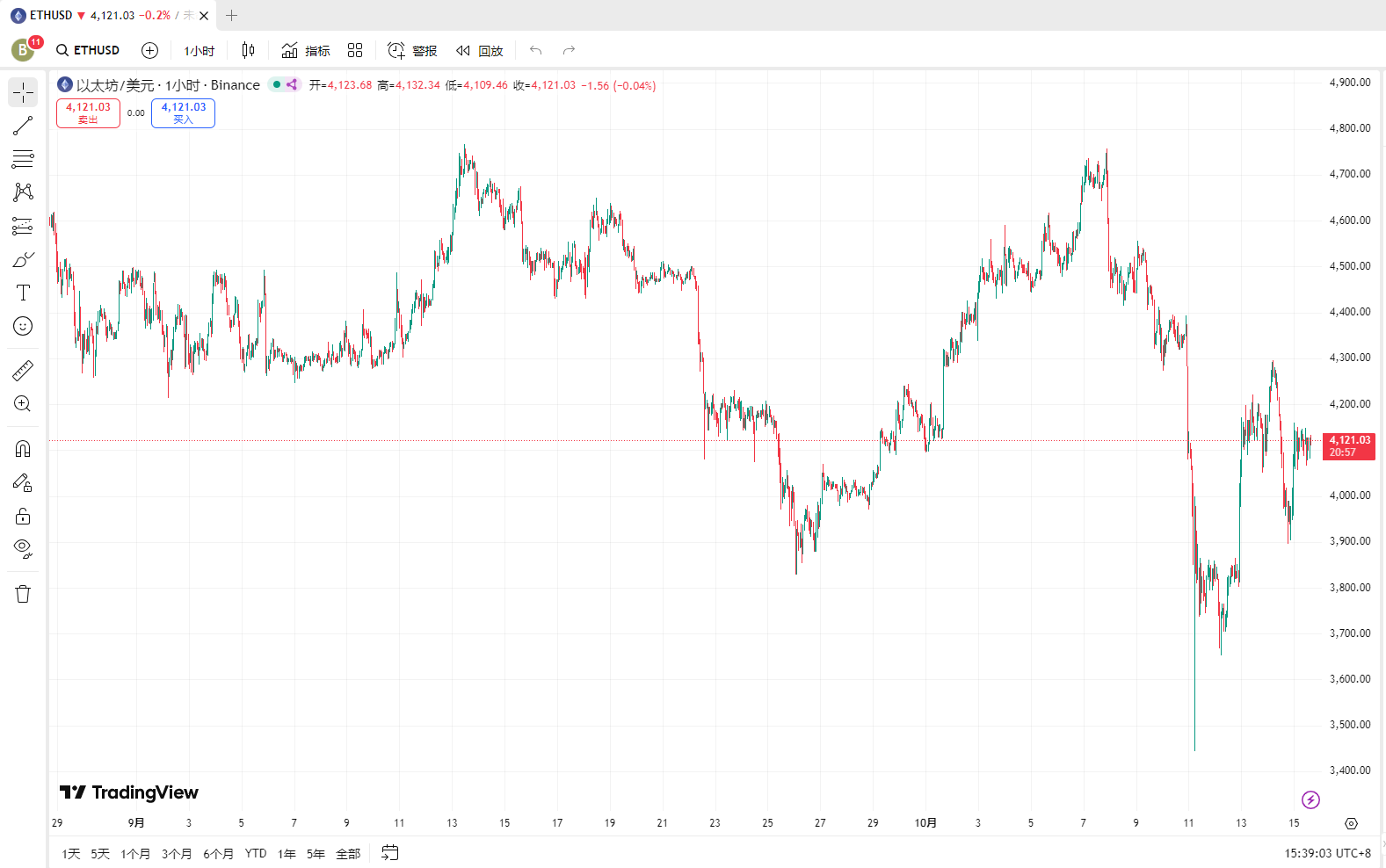 Why was the crash so violent? First was the rampant leverage. The crypto derivatives market was highly mature by 2025, with total perpetual swap open interest exceeding $50 billion and the long/short funding rate ratio soaring to 6.7:1, meaning longs were maintaining positions at extremely high costs. The market reversed instantly from the previous week's long frenzy—where BTC broke through the $120,000 mark—into a liquidation hell overnight. Stop-loss orders triggered like an avalanche, creating a chain reaction: one large liquidation caused prices to fall further, forcing more positions to be closed.
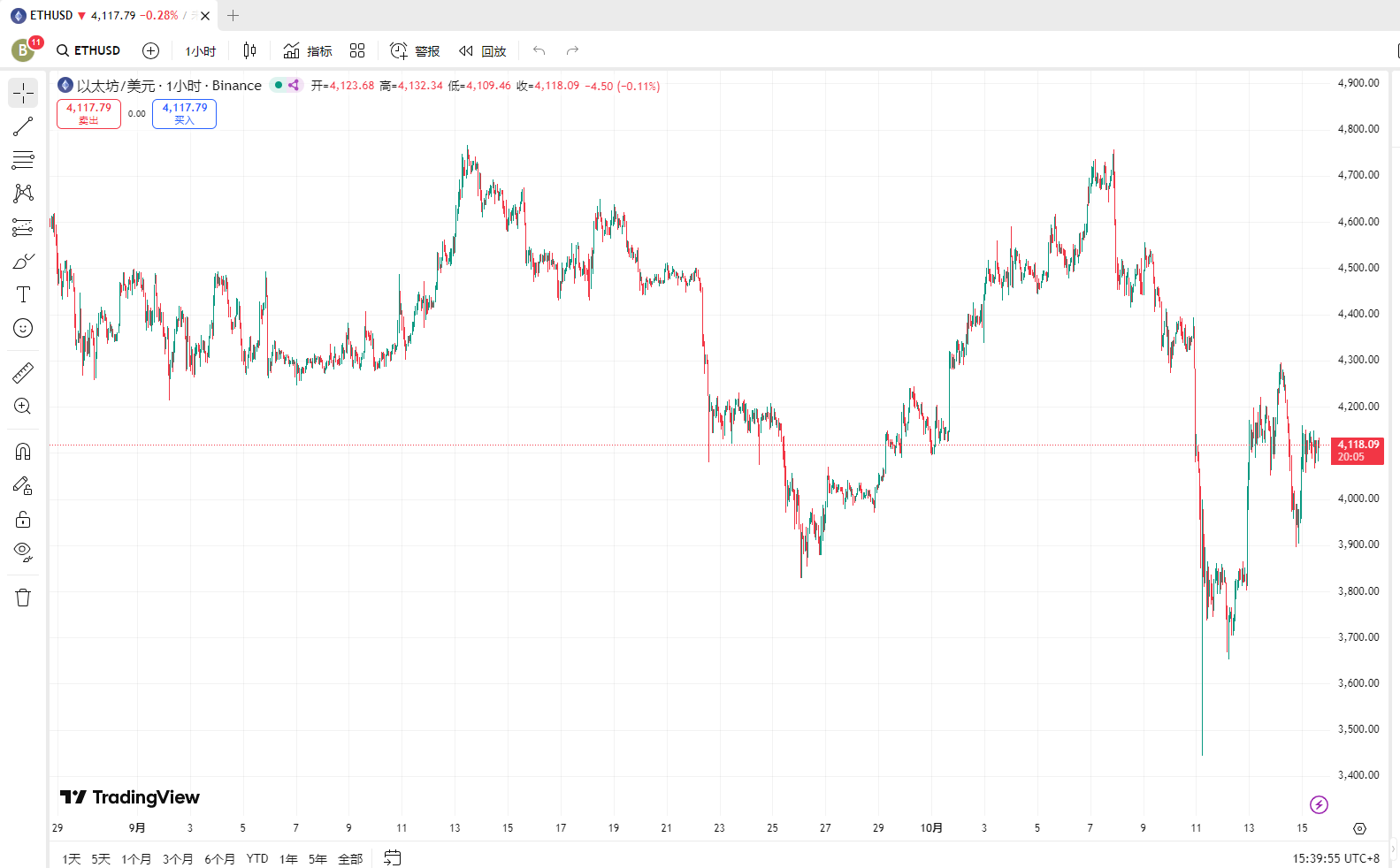 Exchange technical failures amplified the disaster. Binance, as the largest global platform, saw its order book depth shrink from hundreds of millions to tens of millions of dollars. Stop-loss orders failed, users reported system lag, and price indices were inconsistent. Market makers were suspected of withdrawing $70 million in capital during the panic, creating a liquidity vacuum. On platform X (formerly Twitter), user complaints flooded in, with some describing trading as "struggling in a quagmire." Adding a tragic note, unconfirmed rumors circulated about a Ukrainian crypto influencer, Konstantin Galich, committing suicide in his Lamborghini, symbolizing the devastating psychological impact of the event on individuals. The stablecoin USDE depegged to $0.65, further exacerbating the crisis of confidence, causing users to flee to "big brother" stablecoins like USDT and USDC.A whale on the Hyperliquid platform had pre-positioned a $1.1 billion short, netting $190 million profit within 20 hours. Such prophets remind us that the market isn't purely random but is dominated by the games played by liquidity providers and large players. And market makers were the core variable in this stress test—they were supposed to be the shock absorbers, but chose self-preservation at the critical moment.The Nature of Market Makers: The Invisible Engine of the Crypto MarketIn the financial world, market makers act like the lubricant and invisible engine of the market, ensuring smooth transactions. This role is particularly critical and complex in the cryptocurrency space. Simply put, market makers are professional institutions, firms, or algorithmic programs that maintain liquidity by continuously providing bid and ask prices. Unlike regular traders who chase trends, they actively post orders to narrow the bid-ask spread, allowing market participants to enter or exit assets at any time without causing sharp price swings or transaction halts due to a lack of counterparties. Their profits primarily come from capturing the spread, fee sharing, and incentive rewards from exchanges.
 Compared to traditional finance, crypto market makers operate in a unique environment. Traditional stock markets like the NYSE have designated market makers who are regulated and must maintain liquidity for specific stocks during trading hours. But the crypto market is global, operates 24/7, has volatility often 10 times higher than stocks, and liquidity for smaller coins can be thin. This has given rise to specialized high-frequency trading (HFT) firms like Wintermute, GSR Markets, Jump Trading, and Cumberland. These giants possess massive capital and advanced algorithms, allowing them to respond to market changes in milliseconds.Market maker core mechanisms can be categorized. First is order book market making. On centralized exchanges (CEXs) like Binance or Coinbase, they adjust quotes in real-time via API interfaces, ensuring sufficient order book depth. Exchanges often provide incentives, such as reduced fees or rebates, in return for maintaining minimum liquidity levels. This resembles a "mercenary" model: market makers inject capital, and exchanges benefit from increased trading volume.
 Then there's the Automated Market Maker (AMM), an innovation of Decentralized Finance (DeFi). On decentralized exchanges (DEXs) like Uniswap or SushiSwap, AMMs use smart contracts to replace manual operations. The classic model is the constant product formula (x*y=k), where x and y are the quantities of two assets in a liquidity pool, and k is a constant. This allows users to trade anytime without needing a matched counterparty. Regular users can provide liquidity, becoming "passive market makers" and earning a 0.3% fee. However, AMMs have weaknesses: they are susceptible to Impermanent Loss, where the value of LP assets shrinks during price volatility, and during extreme market moves, pools can be drained, unable to adjust flexibly like professional market makers.At the advanced strategy level, market makers often employ cross-exchange arbitrage: buying low on Binance and selling high on Coinbase to balance spreads. Simultaneously, they use delta-neutral hedging, providing options liquidity on derivatives markets like Deribit to absorb volatility risk. AI and machine learning further optimize this: algorithms predict order flow and automatically adjust inventory to avoid being "hunted."In the "10/11" event, the role of market makers was magnified under scrutiny. During the tariff panic, they prioritized withdrawing liquidity from small-cap altcoins, shifting towards large-cap assets like BTC and ETH, causing altcoins to plummet towards zero with "no one to take the other side." Wintermute's Head of Business Development, Arnaud, denied "blow-up" rumors in a post-event interview but admitted that "extreme volatility tested our risk control systems." This reveals the dual nature of market makers: in normal times, they stabilize the market, narrowing spreads and improving efficiency; in a crisis, their self-preservation instinct can accelerate a crash. After all, market makers are not charities but profit-driven entities, constrained by capital adequacy and risk models. In the fragmented crypto ecosystem, they connect CEXs and DeFi, bridge on-chain and off-chain, but also carry centralization risks—if the giants retreat, the entire market becomes like a rootless tree.Market Makers in 10/11: Heroes or Accomplices?In the "10/11" crash, market makers were far from bystanders; they were central players in the eye of the storm. Their actions both helped and worsened the situation, sparking fierce debate within the community: were they heroes or potential accomplices?On one hand, the withdrawal of liquidity by market makers was seen as the primary culprit. At the peak of the event, Binance's order book depth shrunk from hundreds of millions to tens of millions of dollars. This wasn't a natural evaporation but a "flight to safety" by market makers. Professional firms like Jump Trading were suspected of dumping small-cap coin inventory to prioritize protecting core assets and avoid their own liquidation.On the other hand, questions emerged about collusion between exchanges and market makers.CEO Kris Marszalek publicly called for regulatory investigation into the fairness of liquidations, questioning whether internal market-making teams at exchanges were independent and if pricing mechanisms were manipulated. Rumors suggested Binance "intentionally slowed" its systems during the peak, prolonging lag, which could have abetted the liquidation wave and amplified market makers' spread profits. In chaos, spread widening means higher profits: it's easier to buy low and sell high. Community analysis suggested some market makers quickly replenished inventory after the crash, buying the dip, and profited handsomely afterwards. This raised ethical concerns: did they exploit information asymmetry to exacerbate retail losses?However, their contributions cannot be entirely dismissed. Not all market makers stood aside. Firms like GSR Markets injected liquidity when BTC bottomed around $102,000, acting as "buyers of last resort" and helping the price rebound above $110,000. Three days after the crash, GameFi and DeFi sectors rallied against the trend, and AMM pools recovered quickly—Uniswap's TVL dropped only 5% before rebounding, thanks to algorithmic auto-rebalancing. Wintermute's post-event report indicated they maintained delta-neutral positions on ETH derivatives, absorbing some of the impact and preventing greater systemic risk.In normal times, their contribution is irreplaceable: they narrow spreads to improve market efficiency, absorb daily shocks to prevent flash crashes, and innovate with HFT and AI to optimize the trading experience. But in a crisis, their algorithmic risk controls prioritize self-preservation, leverage-induced liquidations are magnified tenfold, and conflicts of interest need transparency. This teaches us the need for mandatory "minimum depth" requirements, where regulators could mandate market makers maintain certain order levels even in extreme volatility; algorithms could have built-in "circuit breakers" to automatically pause withdrawals; DeFi AMMs could complement CEX shortcomings by providing a decentralized buffer. Ignoring this, similar events will repeat.Future Outlook: Building a More Resilient Market Making EcosystemThe 10/11 event served as a mirror, reflecting the immaturity and potential of the crypto market: unrestrained leverage, fragmented liquidity, and a regulatory vacuum. These problems aren't new. On-chain analyst Murphy, comparing the 2022 Luna collapse, pointed out that while painful this time, whales didn't panic-sell, and long-term BTC holdings remained firm—the number of large holder addresses didn't decrease, suggesting the bull run isn't over, just a temporary reshuffling. Although the total market cap evaporated $300 billion, it recovered 20% within a week, proving crypto's resilience.For market makers, this was a baptism of fire full of both opportunities and challenges. In the future, their role will become more diversified. First, institutional entry will inject stable capital. BlackRock's BTC ETF and similar products have attracted trillions in traditional capital; market makers can expand into Real World Assets (RWA) like tokenized bonds, providing cross-chain liquidity and reducing reliance on volatility.Hybrid AMM + HFT models are emerging: like Curve's stablecoin pools combined with professional algorithms, reducing dependence on CEXs. Post-2025, Layer 2 solutions like Arbitrum will enhance DEX speed, allowing market makers to perform real-time cross-chain arbitrage and build a unified liquidity layer. This not only reduces impermanent loss but also enhances resistance to black swan events.



